
The 9th edition of the traditional "SFEL" event—an international scientific school for XFEL, synchrotron, and…
European Solar Telescope (EST) – Establishment of a Council of Government Representatives
Spain, Slovakia, and the Czech Republic take the lead in the European Next Generation Solar Telescope project
The European Solar Telescope (EST) project has taken a decisive step towards the construction of this infrastructure by establishing a Board of Governmental Representatives (BGR), which represents the first formal commitment at government level to this European flagship project in the field of solar physics research.
Until now, the EST project has been managed by a scientific consortium of universities and research institutions from across Europe. The creation of the BGR transforms the EST into a collaboration between European nations, whose national governments provide political support for the project and the creation of the future EST-ERIC consortium.
The first meeting of the BGR, organized by the Spanish Ministry of Science, Innovation and Universities (MICIU) in Madrid on October 28, 2025, brought together representatives from Spain, Slovakia, and the Czech Republic. The Council adopted its mandate, elected its chair, vice-chair, and secretary, and defined a roadmap for the establishment of EST-ERIC, which will manage the construction and operation of the telescope.
Spain was represented at the meeting by Inmaculada Figueroa Rojas, Deputy Director General for International Consortia, Organizations and Research Infrastructures, together with Ana Aricha Yanguas and Esther Martín Malagón, who was elected as the first Chair of the BGR. Slovakia was represented by Jakub Birka, Director General of the Research and Development Section of the Ministry of Education, Research, Development and Youth, and Robert Ševčík, Advisor to the State Secretary of the Ministry of Education, who was elected Vice-Chair of the BGR. They were accompanied by senior government officials and scientists, including Pavol Hvizdoš, Vice-President of the Slovak Academy of Sciences, and Juraj Tomaga, Ambassador of the Slovak Republic to Spain. The Czech Republic was represented by Marek Vyšinka, Head of the Research Infrastructure Department at the Ministry of Education, Youth and Sports of the Czech Republic.
The meeting was also attended by leading scientific representatives from the Astronomical Institute of the Slovak Academy of Sciences (AsÚ SAV), the Instituto de Astrofísica de Canarias (IAC), and the Instituto de Astrofísica de Andalucía (IAA-CSIC). The directors of these three institutions, Peter Gömöry (AISAS), Valentín Martínez Pillet (IAC) and Olga Muñoz Gómez (IAA-CSIC), confirmed their institutions’ commitment to the implementation of the EST project at the event.
The highlight of the event was the signing of a Memorandum of Understanding between Spain and Slovakia by Eva Ortega Paíno, Secretary General for Research at MICIU, and Jakub Birka, formalizing Slovakia’s participation in the EST project. The agreement paves the way for broader government involvement across Europe and strengthens the future of the project within ERIC.
These steps have significantly strengthened the position of the EST project. “The establishment of the Council of Government Representatives and the signing of the memorandum is a historic milestone for EST,” said Manuel Collados, chief coordinator of the EST project. “It shows that European governments are ready to take joint responsibility for advancing research on our star and building one of the most ambitious scientific infrastructures in the world.”

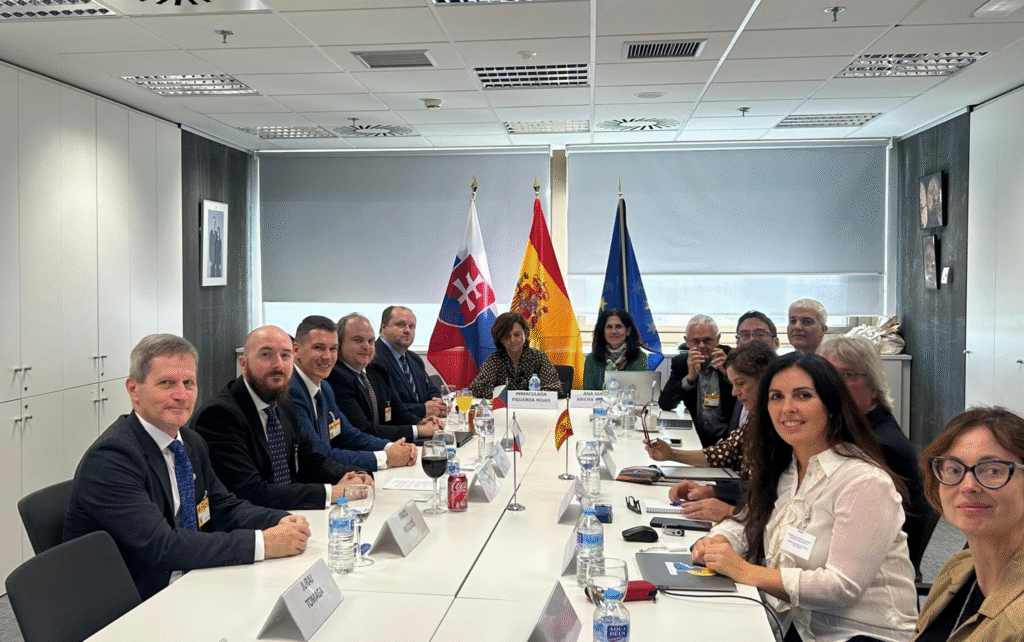
Participants at the meeting held at the Ministry of Science, Innovation, and Universities.
Visit to the Roque de los Muchachos Observatory
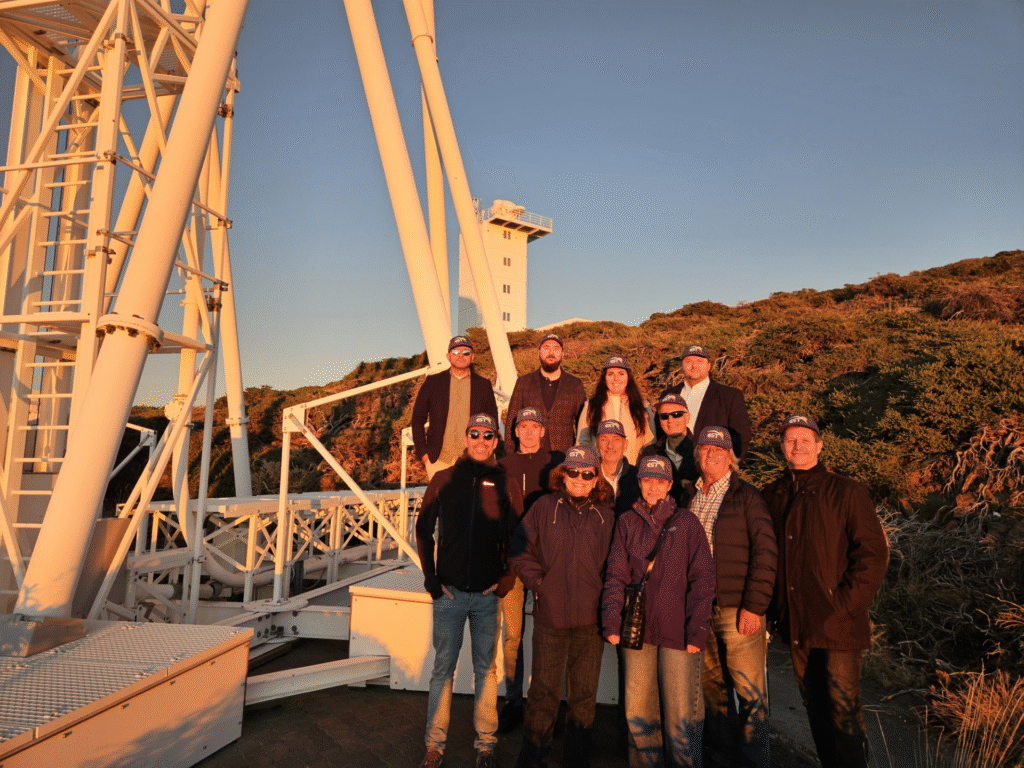
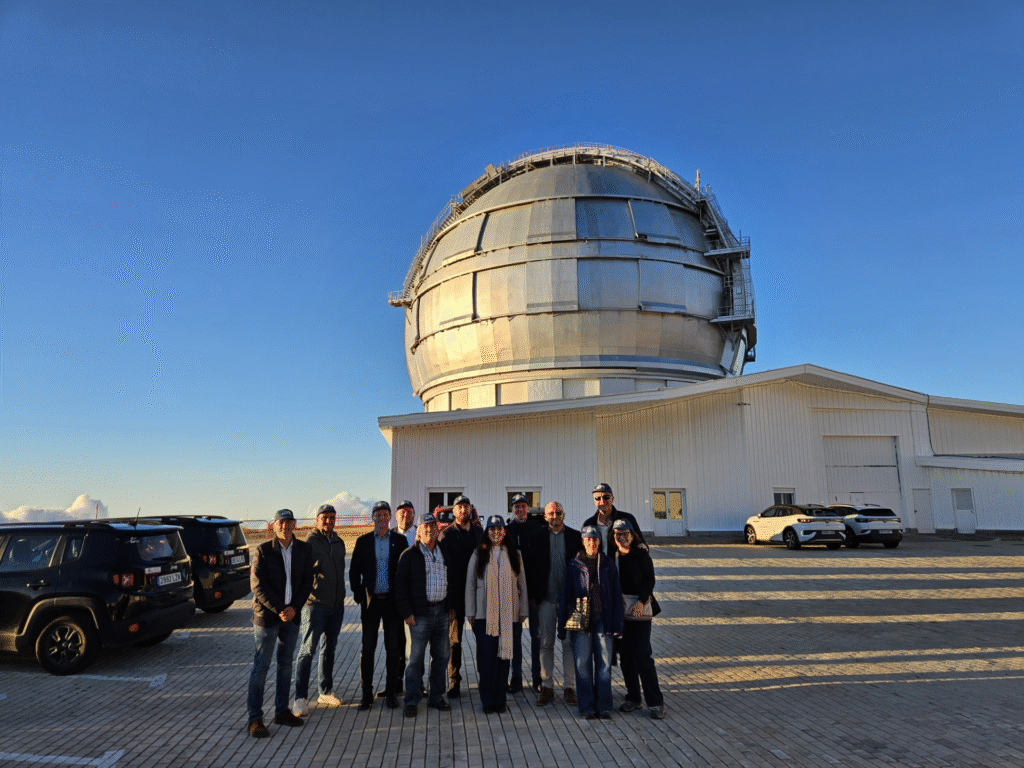
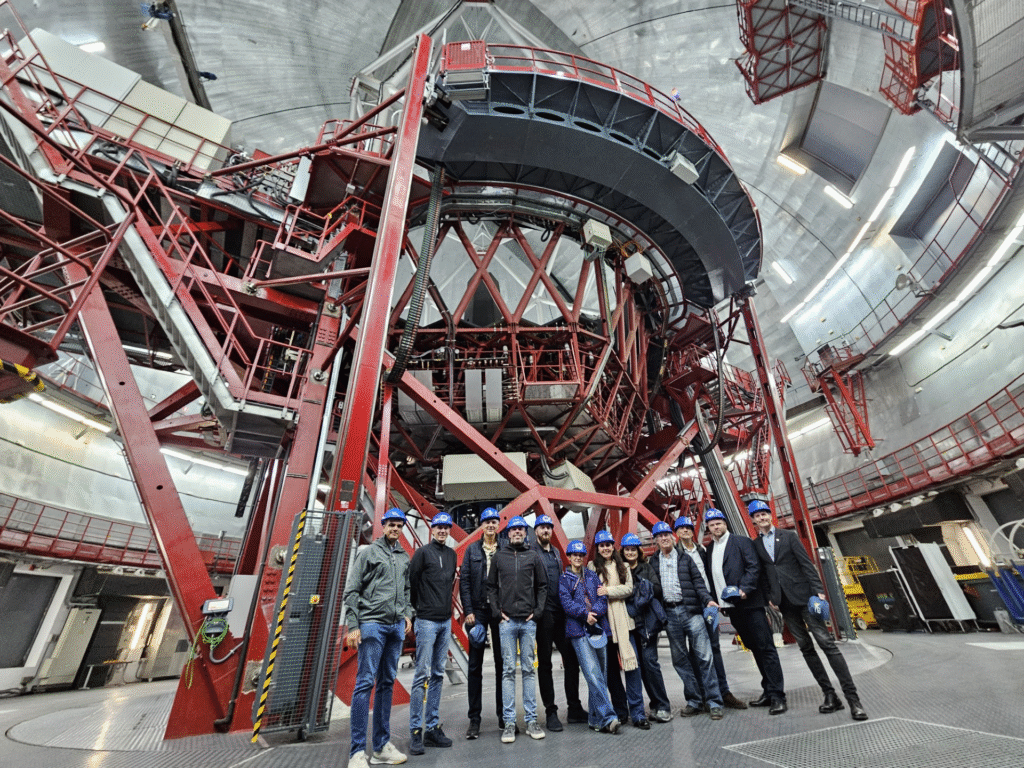
After the meeting in Madrid, the delegation representatives visited the Observatorio del Roque de los Muchachos (ORM) on the island of La Palma. This location was chosen for the construction of the EST telescope due to its globally unique “astroclimatic” conditions.
Javier Franco Hormiga, Director of the Canary Islands Agency for Research, Innovation and the Information Society (ACIISI), which has supported the EST project since its preparatory phase and played a key role in setting up the project office in the Canary Islands, also joined the delegation on the island.
At ORM, the delegation visited the exact location where the European Solar Telescope will be built, as well as several cutting-edge facilities already operating or under construction at the observatory (such as the currently largest ground-based telescope, GranTeCan). ORM is located at an altitude of 2,396 meters and is managed by the Instituto de Astrofísica de Canarias (IAC).

Comments (0)